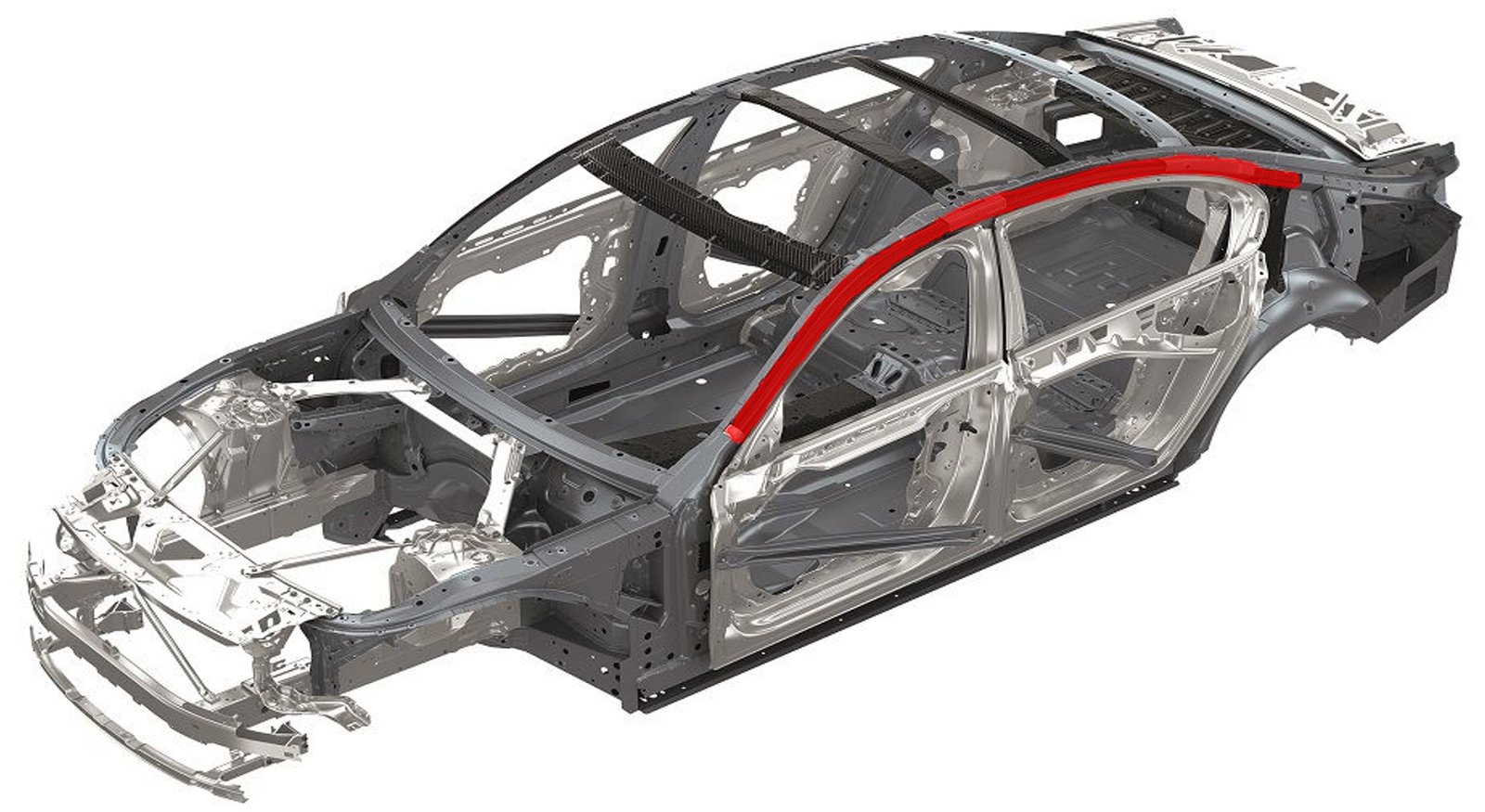
Machining of Automotive Composite Materials
Implementation of a new orbital milling process for high-quality bore holes in carbon and glass fibre reinforced automotive structural components.
View Case Study →
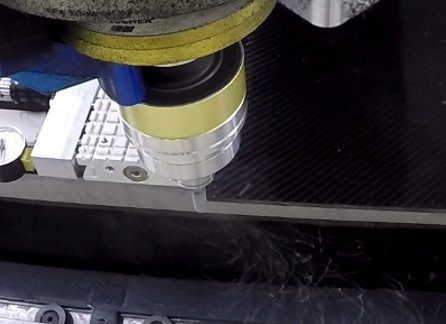
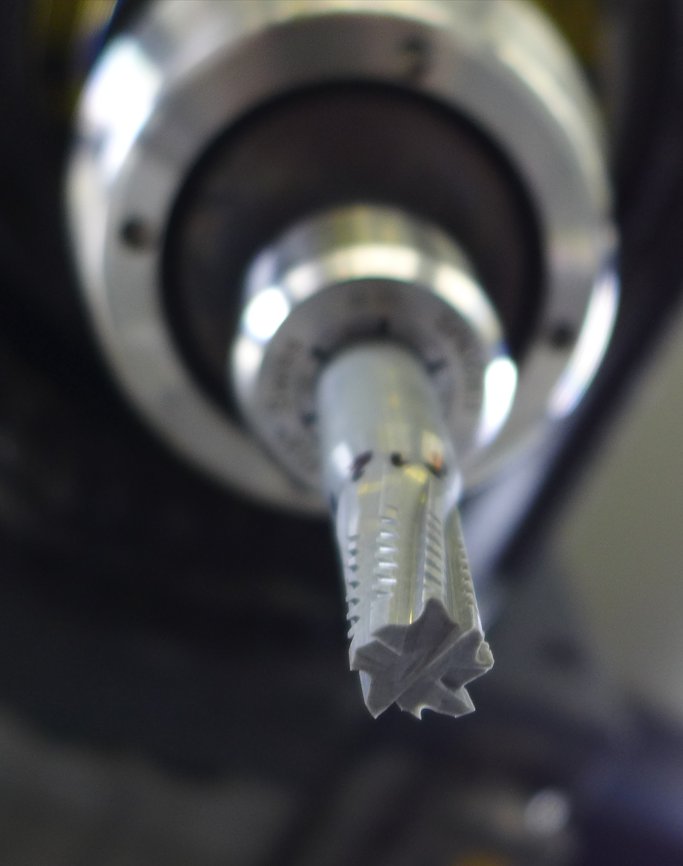
Development and testing of a full-ceramic silicon nitride end mill for high-speed machining of carbon and glass fibre reinforced plastics, benchmarked against conventional cemented carbide tooling on cutting force, tool wear and part quality.
Advanced Materials Machining
Ceramic Cutting Tools (Si3N4)
Project Lead
Implemented
Tungsten, the key raw material in cemented carbide cutting tools, is available in less than 0.01% of the Earth's crust by mass, an increasingly relevant constraint for a cutting tool consumed at industrial scale. Full-ceramic silicon nitride tools are built instead from elements present in far greater abundance.
Rising tungsten prices add an economic argument on top of the resource-scarcity one: alternative cutting materials are increasingly a sensible choice not just for supply security, but for cost as well.
Abundance alone does not make a good cutting tool. The real question was whether a diamond-coated silicon nitride ceramic could actually perform in demanding, high-speed milling of carbon and glass fibre reinforced plastics, not just serve as a theoretical alternative on a data sheet.
The investigation covered the full path from tool concept to process validation, comparing the ceramic tool against cemented carbide at every step.
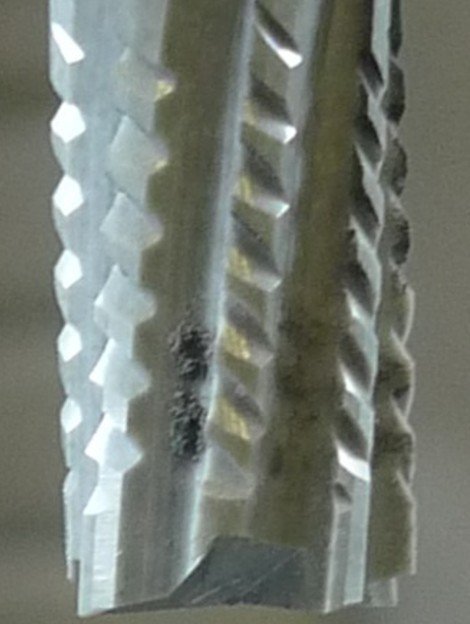
Clear division of responsibilities between a research institute, a cutting-tool manufacturer and an automotive OEM.
Ceramic tools are around 78% lighter than cemented carbide, directly enabling higher achievable spindle speeds. Since cemented carbide tools run into rotational mass limits at high speed, this weight advantage is a genuine enabler for high-speed cutting (HSC) strategies rather than a marginal benefit.
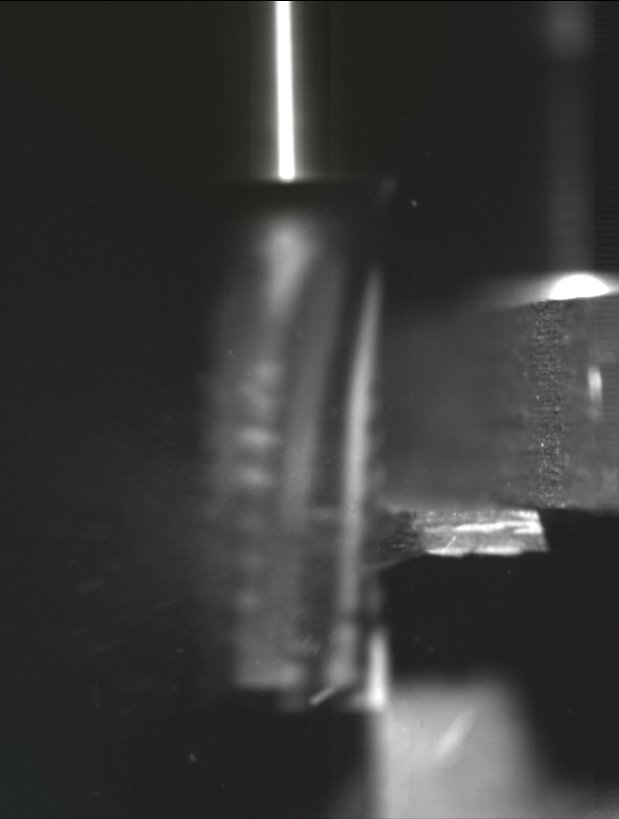
Increasing cutting speed also paid off directly in the process: feed and feed-normal forces dropped as cutting speed rose, and the highest component edge quality over an extended milling path was recorded at the highest cutting speed tested, 1665 m/min.
Before wear ever entered the picture, the starting edge itself had to be controlled. Both the cutting-edge radius and the density of edge defects increased with coarser grinding grit used to prepare the ceramic edge, so a process-reliable, consistently small starting radius was only achievable with fine grinding grits.
Cemented carbide and ceramic tools wear in fundamentally different ways. The carbide tool develops a wear-related chamfer with a steadily increasing cutting-edge radius. The ceramic tool instead shows pronounced flank wear alongside a decreasing cutting-edge radius, forming a distinctive sawtooth-like edge profile with a tip spacing of roughly 10 to 20 micrometres.
Adding ultrasonic assistance showed a trade-off rather than a universal improvement: quality was lower than conventional milling over a short tool path, but higher than conventional milling once the path length increased, pointing to a benefit that only pays off over sustained tool use.
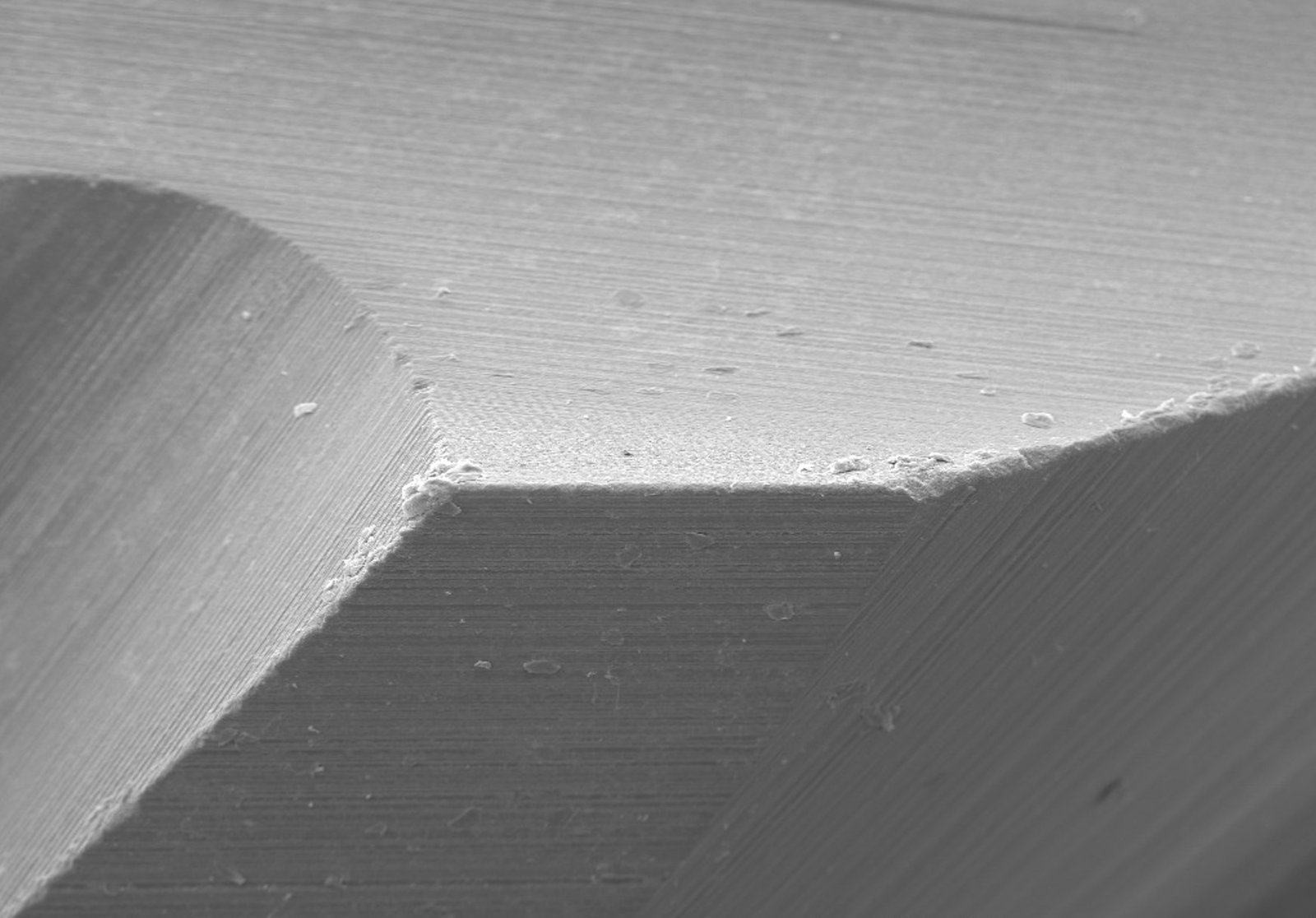
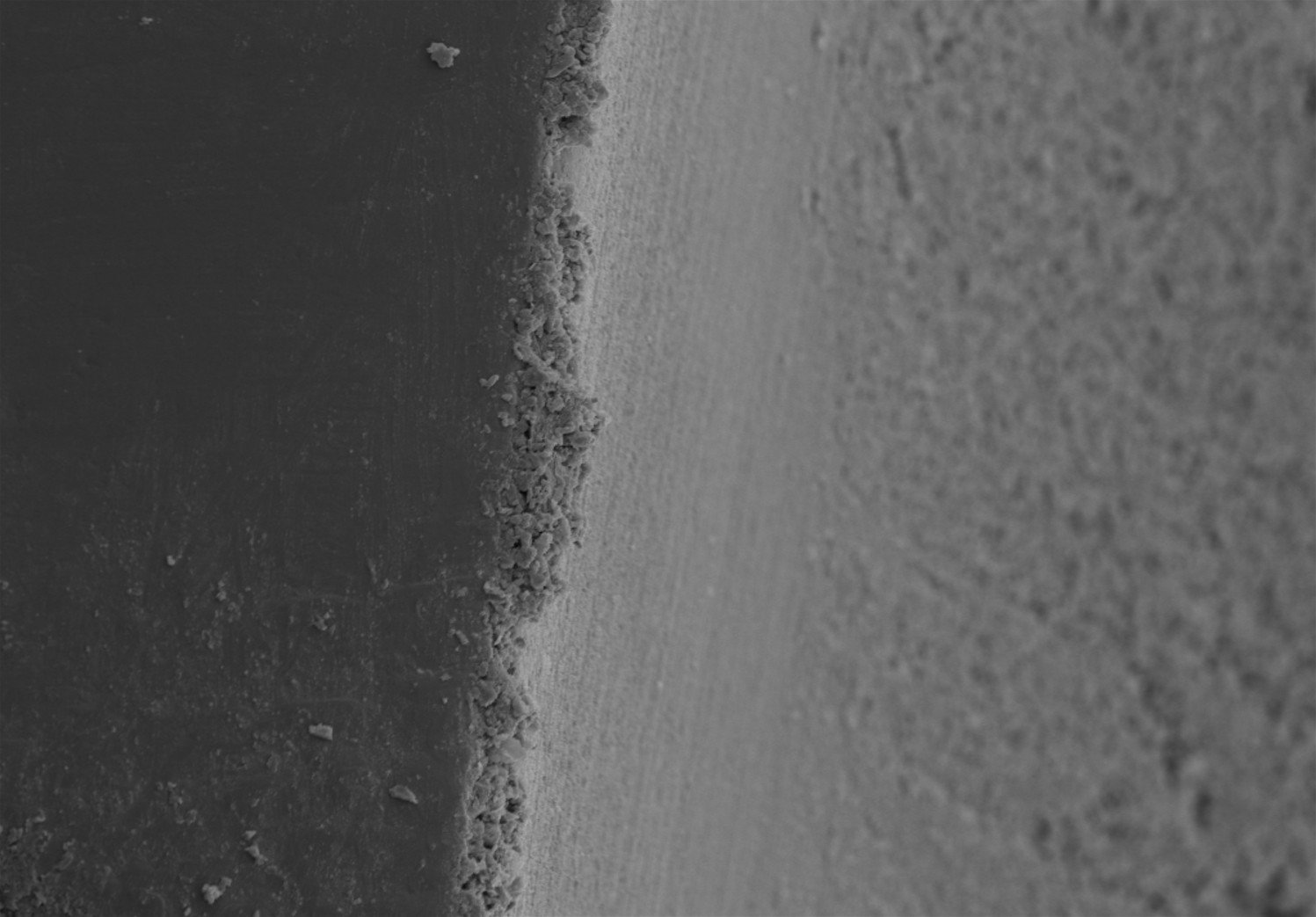
Across force, wear and quality measurements, the diamond-coated silicon nitride tool proved itself a process-stable option for high-performance composite machining.
This project demonstrates how a research-to-industry partnership between a research institute and a cutting-tool manufacturer turned a resource-efficiency argument for ceramic cutting materials into a validated, high-performance tool concept.
By systematically comparing a diamond-coated silicon nitride full-ceramic end mill against cemented carbide across cutting force, wear behaviour and component quality, the work identified a genuinely viable alternative for high-speed machining of carbon and glass fibre reinforced plastics, one built from far more abundant raw materials.
Looking to implement an alternative to cemented carbide? Let's get in touch →
Discover additional manufacturing and industrialisation projects.
Implementation of a new orbital milling process for high-quality bore holes in carbon and glass fibre reinforced automotive structural components.
View Case Study →
A Six Sigma driven turning investigation that identified the cutting tool and process parameters governing material removal rate and surface quality.
View Case Study →