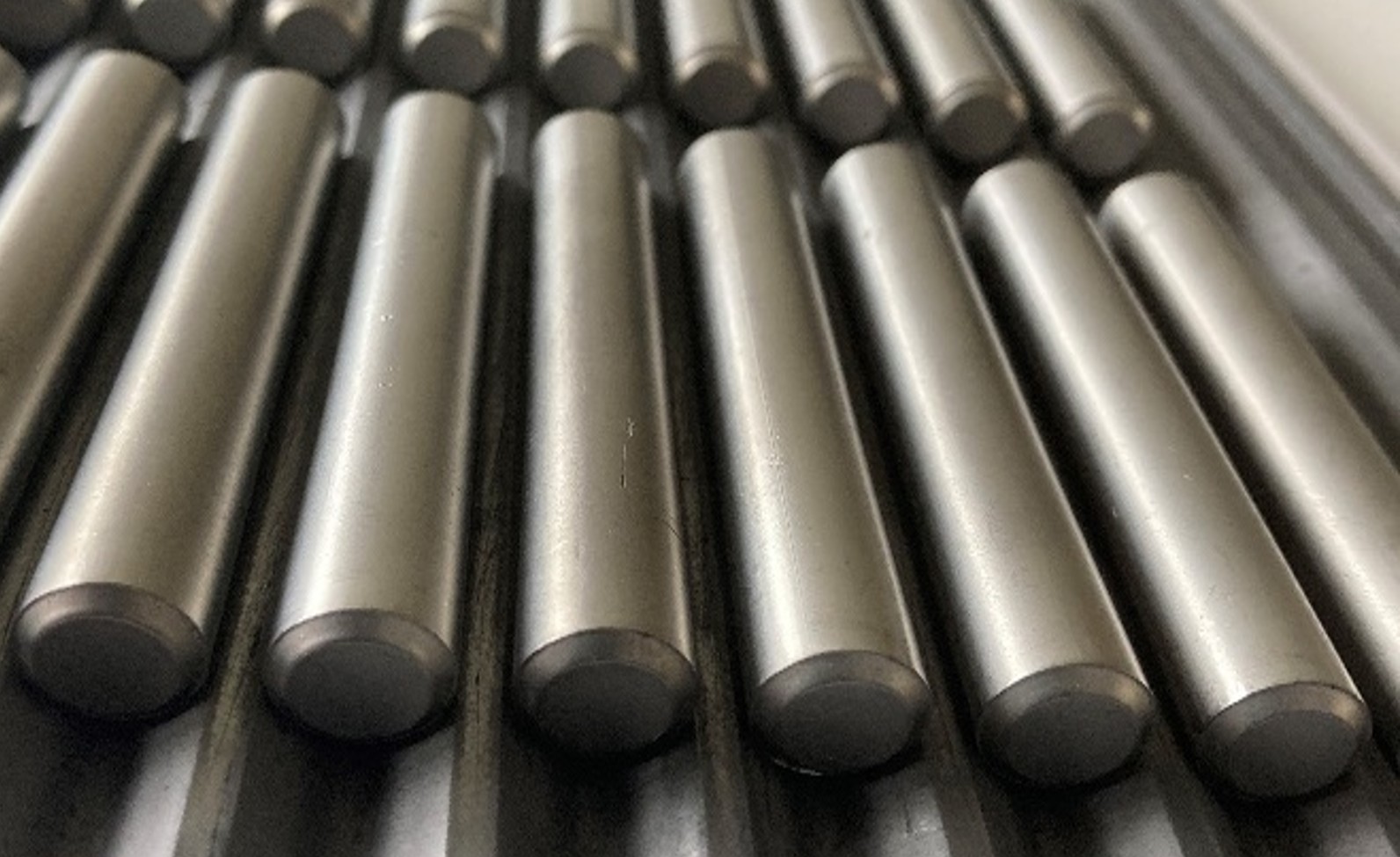
Tool Design for High Productivity, Defect Free Direct Pressed Rods with Chamfer
A tool design and root cause investigation programme that eliminated cracking at the direct pressed chamfer while raising press productivity.
View Case Study →
A Lean Six Sigma project that traced excessive cemented carbide rod deflection back to sintering plate geometry, redesigned the plates and their substrate material, and cut scrap costs by more than NZ$555,000 per year.
Cemented Carbide Manufacturing
Sintering Process Optimization
Six Sigma Project Lead
Implemented
A specific cemented carbide rod article was suffering from excessive deflection out of straightness. Rods bending beyond tolerance had to be scrapped and the order restarted, driving up failure costs and delaying delivery to the customer. At the project's outset, the roundness-related scrap rate for this article stood at 33.8%, corresponding to a process sigma level of just 1.9.
The target was a 50% reduction in this specific scrap category, to be achieved through a structured Six Sigma DMAIC project rather than trial and error, since the deflection could not be explained by the rods themselves alone.
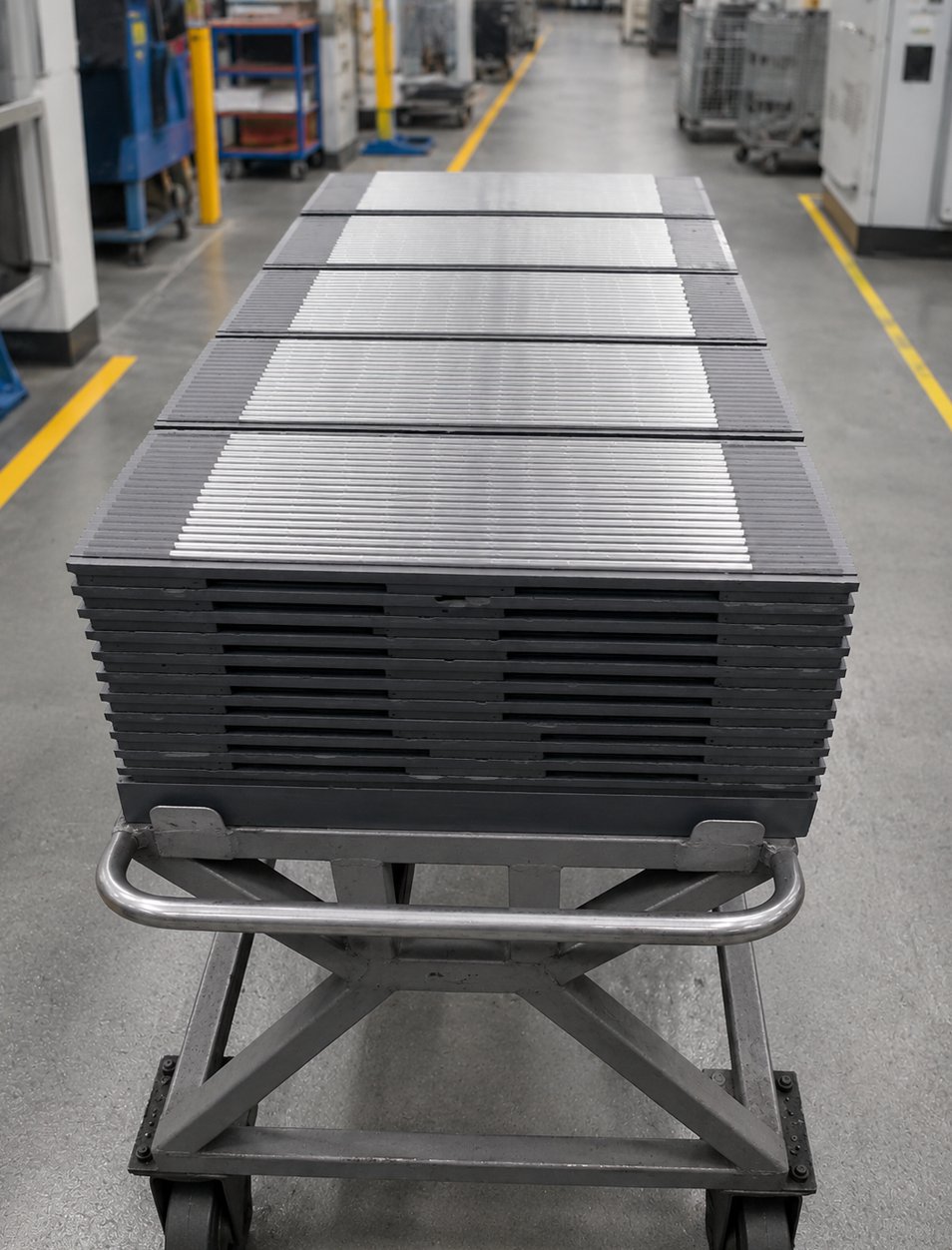
The project scope was deliberately narrow: the article's sintering setup, its roundness measurement, and the sintering plates and aids used, without touching the sintering process itself, the article geometry, or the upstream extrusion and downstream grinding processes.
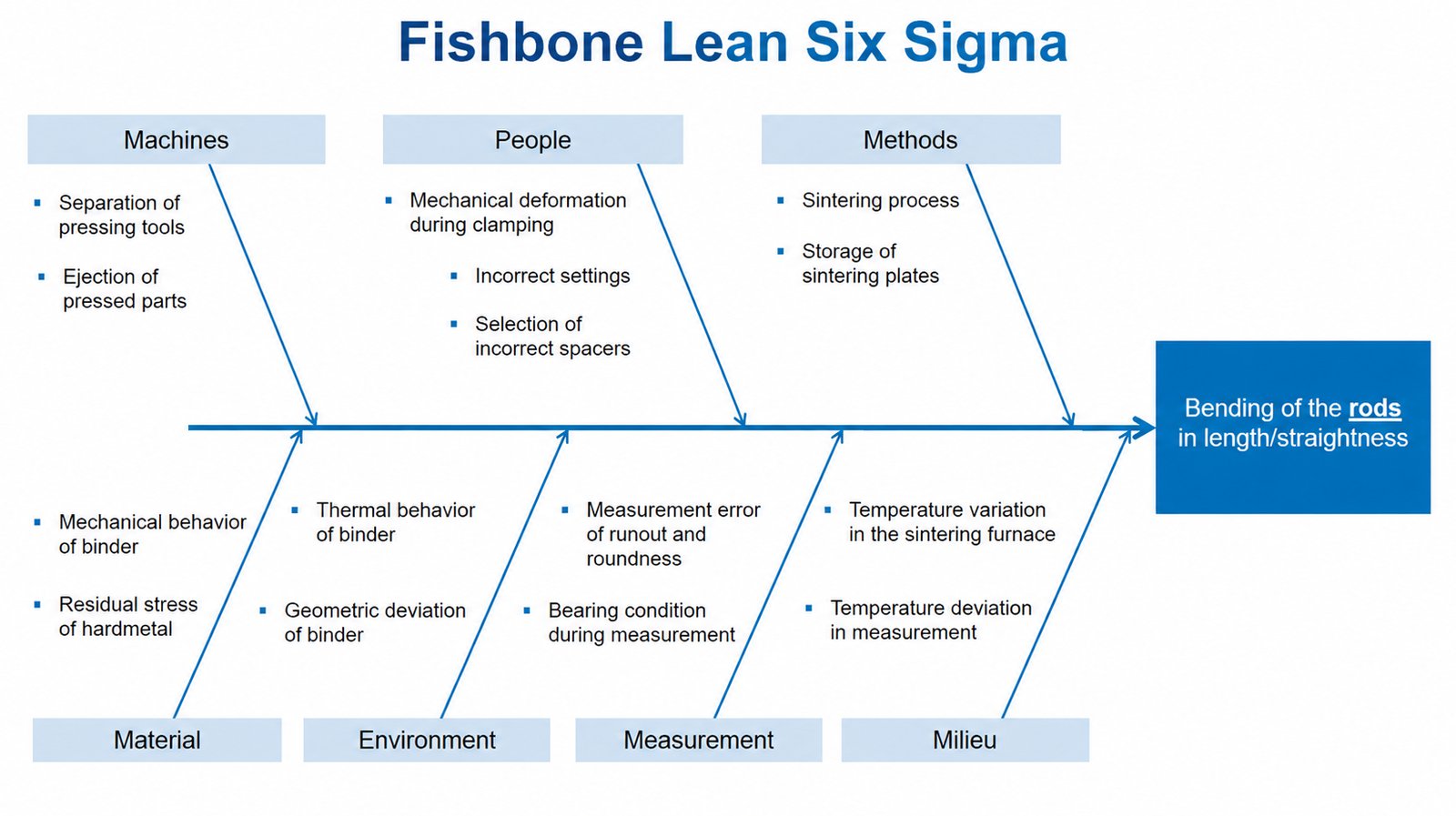
A fishbone analysis across people, methods, materials, measurement, machines and environment surfaced dozens of possible contributors to rod deflection, from handling and separating the extruded rods to sintering setup and furnace temperature uniformity. Rather than chase every branch, the team prioritised the most plausible mechanical and thermal causes with the full project team.
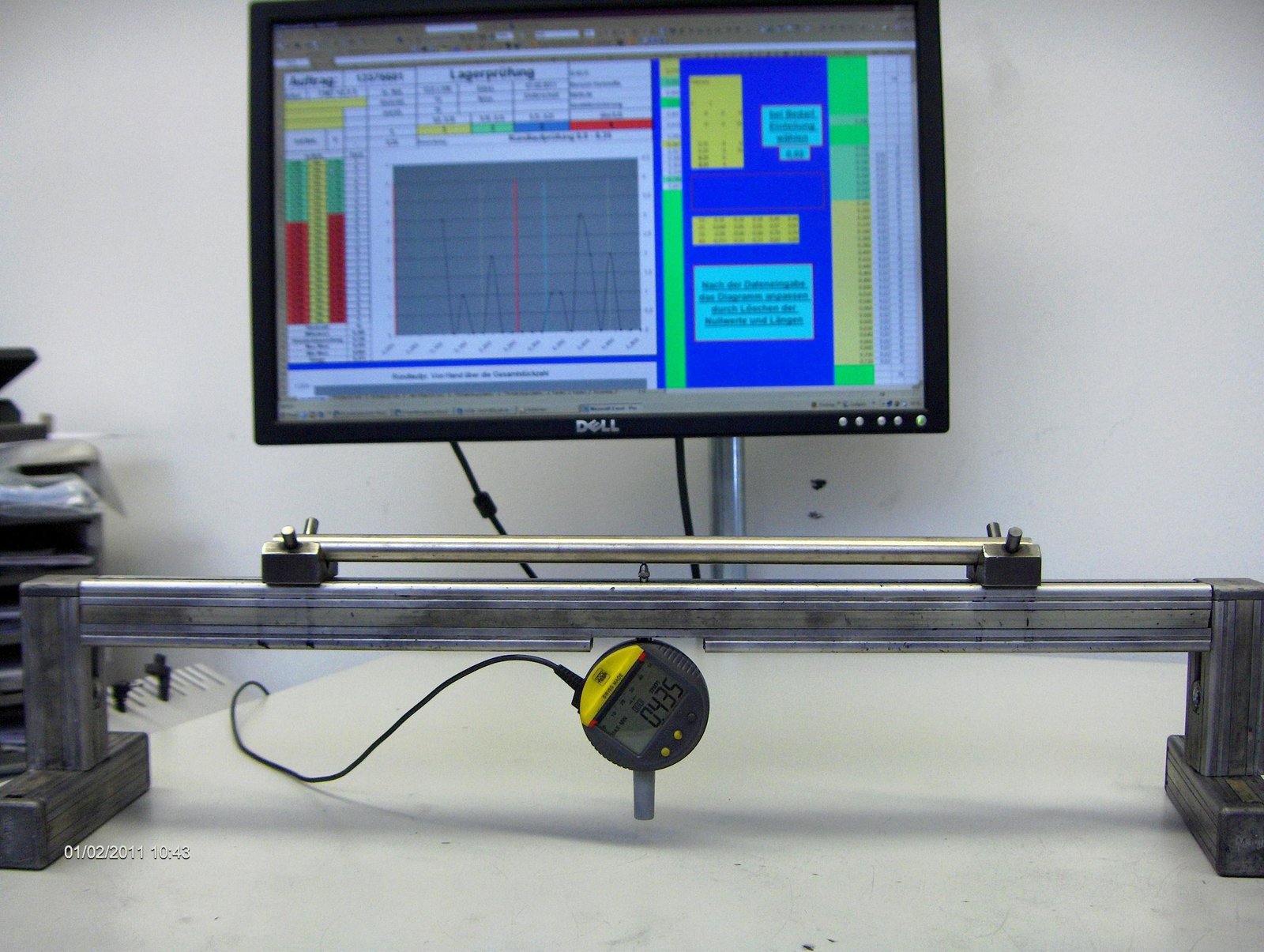
Dedicated sintering trials and precision laser-interferometer measurement of the sintering plates themselves confirmed the key correlation: plate deflection after each firing cycle tracked closely with the deflection measured on the rods that had rested on it.
The fix targeted the sintering plate itself: its 3D geometry was constrained to what the process actually required, and the graphite substrate was changed to a variant with lower thermal susceptibility, reducing the plate's tendency to deform under repeated firing cycles.
The new plates were piloted on smaller production quantities before new work instructions were written and rolled out to standard production, with staff trained on the change ahead of go-live.
Results were confirmed on real production data and locked in with a dedicated control chart, not just measured once at project close.
| Metric | Measure Phase | Control Phase |
|---|---|---|
| Scrap rate | 33.8% | 3.6% |
| Sigma value | 1.9 | 3.3 |
| DPMO | 337,662 | 35,714 |
This project demonstrates how a structured Six Sigma DMAIC approach turned a persistent, poorly understood scrap problem into a well-defined, quantified, and permanently resolved process issue.
By resisting the temptation to fix the rods directly and instead tracing the defect back to the sintering plates that shaped them, the project delivered a fix that was both cheap to implement and durable in production, backed by a control chart that keeps the improvement in place going forward.
Looking to eliminate a hidden scrap driver in your own process? Let's get in touch →
Discover additional manufacturing and industrialisation projects.
A tool design and root cause investigation programme that eliminated cracking at the direct pressed chamfer while raising press productivity.
View Case Study →
Implementation of a new orbital milling process for high-quality bore holes in carbon and glass fibre reinforced automotive structural components.
View Case Study →